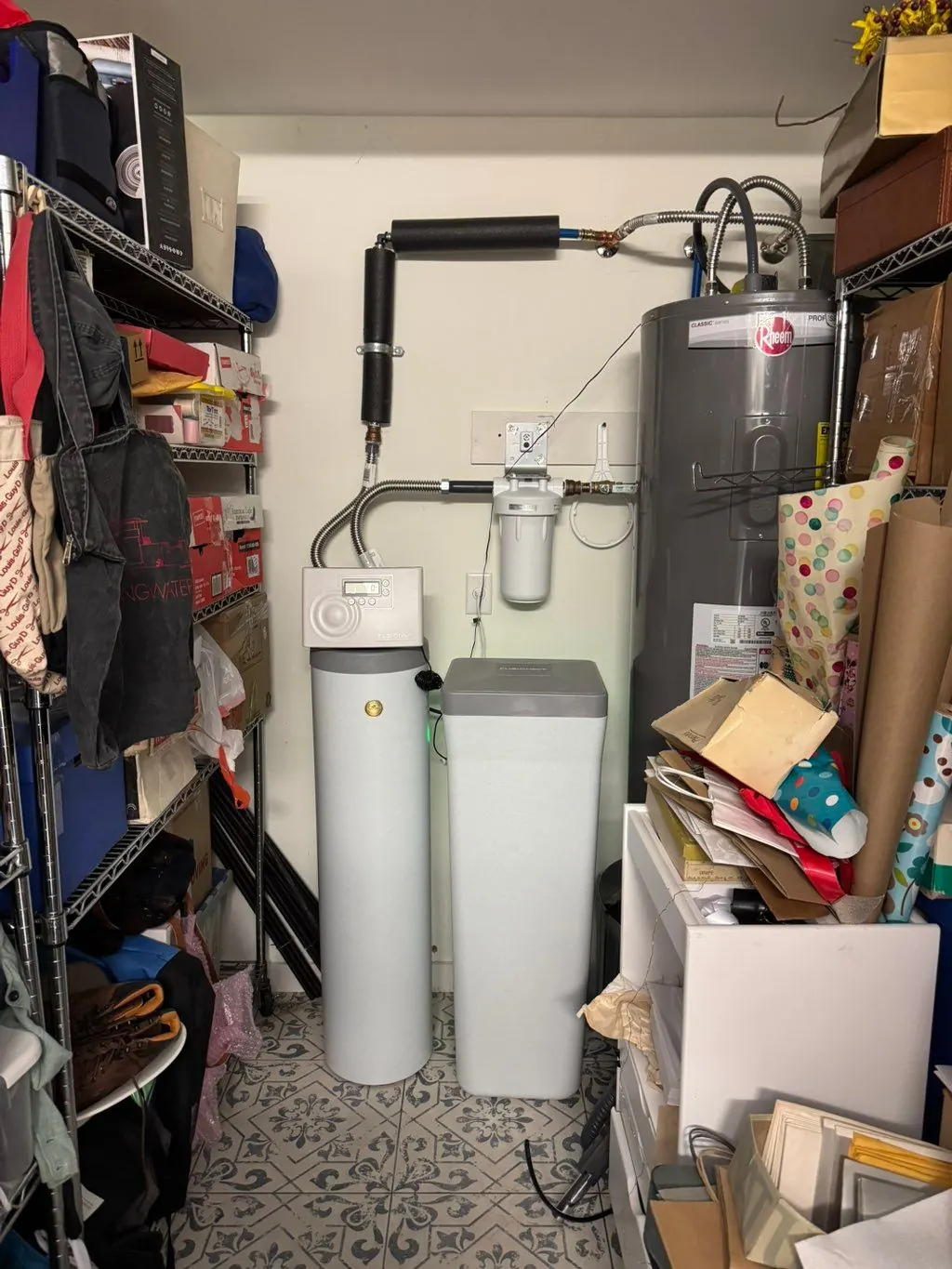
The Waiting Problem
In many Austin homes, the water heater is in the garage or a utility closet located far from the master bathroom. Every morning, water runs cold through a long stretch of pipe before the hot water finally arrives at the fixture. That waiting period wastes both water and the time it takes to drain.
What a Recirculation Pump Does
A hot water recirculation pump keeps heated water moving slowly through the supply line so it is already at the fixture when you turn on the tap. Instead of cold water sitting in a long pipe between uses, the system circulates warm water continuously or on a schedule.
Dedicated Return Line vs. Crossover Valve
Homes built with recirculation in mind have a dedicated return line that loops hot water back to the heater. Older homes without that return line can use a crossover valve installed at the far fixture, which sends cooled water back through the cold supply line. Both approaches work, though the crossover method can result in slightly warm water at the cold tap for a short period.
Timer-Based vs. On-Demand
A timer-based pump runs during the hours you typically use hot water — morning and evening, for example — and shuts off the rest of the day. An on-demand system uses a sensor or button to activate the pump only when needed, which uses less energy but adds a short wait. For most households, a well-set timer is the most convenient option.
Energy Use and Water Savings
A recirculation pump does consume a small amount of electricity to run the motor, and keeping water at temperature adds some load to the water heater. With a timer-based pump running only during peak hours, that additional energy cost is modest. The water savings from eliminating the cold-water purge can offset part of that cost, particularly in households that use a lot of hot water daily.
Compatibility With Your Existing Water Heater
Most tank water heaters can be paired with a recirculation pump without major modification. Tankless water heaters require more attention to compatibility since they heat water on demand and need to be activated before the pump pulls flow. A plumber can confirm whether your specific unit supports recirculation before the installation.
Is It Worth It?
For households with a long wait for hot water and members who use the shower in the morning, the convenience is noticeable from the first day. The installation cost is a one-time expense. Whether that trade-off makes sense depends on how much the wait frustrates you and how much water your household is losing to cold-line purging each day.
What the Installation Looks Like
A basic recirculation pump installation typically takes a few hours. The pump mounts at the water heater, connections are made to the supply and return lines, and the timer or controls are set. The plumber should test all fixtures and walk you through the timer settings before leaving.
The Takeaway
A recirculation pump is one of the more straightforward plumbing upgrades an Austin homeowner can make. If waiting for hot water is a daily annoyance in your house, it is worth having a plumber assess whether your current setup is a good fit for one.
Need plumbing help in Austin? Mango Plumbing is ready.